Adopted a Dog in Chesapeake? A 30-Day Training Plan
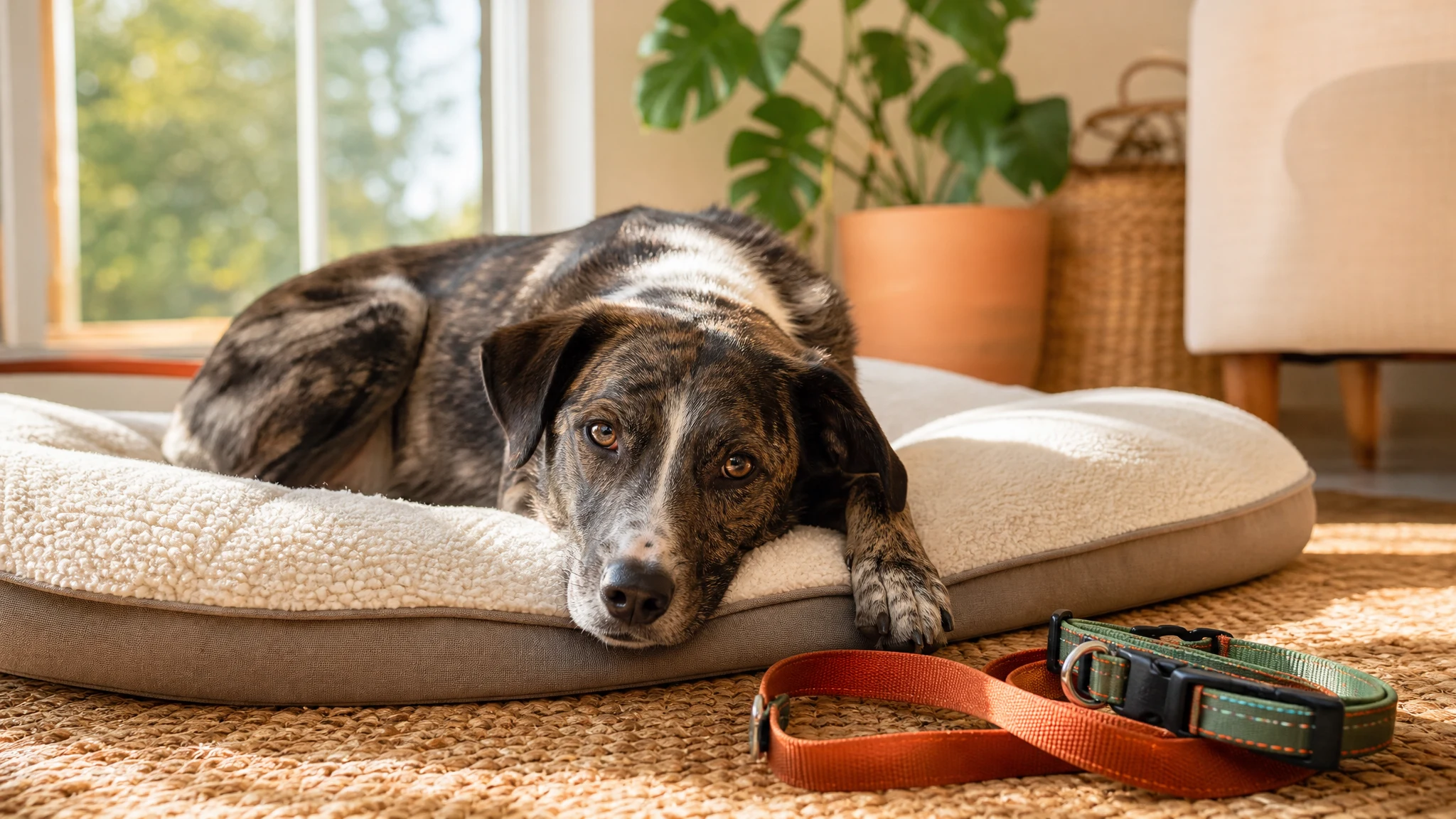
General training information. For aggression, sudden behavior changes or health concerns, see your veterinarian first.
Bringing home a new dog is exciting, and it can also be a lot for the dog. Everything is new: the smells, the people, the floors, the sounds of your street. The first month is less about teaching tricks and more about helping your dog feel safe and learn how your home works.
This plan breaks the adopted dog first 30 days into four weeks. It is written for training a rescue dog in Chesapeake, so it also covers the local license and leash rules, the dog parks, and the mosquito and tick season that shapes life here. Go at your dog's pace. If a week takes ten days, that is fine.
Where Chesapeake adopters often start
Many local adopters begin at one of two places. The Chesapeake Animal Services Unit, the city shelter, is at 2100 S Military Highway, Chesapeake, VA 23322. The Chesapeake Humane Society, a nonprofit, has an Adoption Center at 1149 New Mill Drive. According to its website, the center is open Tuesday to Sunday, 12 pm to 4 pm, and closed Monday. Call 757-546-5355 to confirm hours before you go.
Whichever place your dog came from, ask for any records they have: vaccines, known history, food, and notes on how the dog behaved in the kennel. Those details help you plan the first weeks.
What you need before day one
- A well-fitted flat collar or harness with an ID tag, plus a standard fixed-length leash
- A second leash or a harness clip, in case a dog slips a collar in the first days
- A crate, an exercise pen or baby gates to set up a safe space
- A soft bed or blanket for that space
- Small, soft treats your dog likes, cut pea-sized
- Enzymatic cleaner for accidents
- A few chew items and food puzzles, such as a stuffed rubber toy
- Poop bags
- A notebook to log meals, potty breaks, sleep and any worries
You do not need special gear. Skip shock, prong and choke collars. The American Veterinary Society of Animal Behavior (AVSAB) recommends reward-based training, and a fearful rescue dog especially needs to learn that new things are safe, not that they hurt.
Take care of the paperwork early
Chesapeake has a few rules worth handling in the first days.
- Rabies vaccine. The City of Chesapeake Laws page (Sec. 10-43) and Va. Code 3.2-6521 require dogs four months and older to be vaccinated against rabies by a licensed veterinarian.
- License. Under Sec. 10-62, dogs four months and older must be licensed each calendar year. PetData, the city's licensing portal, lists a 1-year license at $10.00 for an unaltered dog and $7.00 for a spayed or neutered dog. All licenses expire December 31, and the rabies vaccination must be valid on the date you pay. Check with the City Treasurer or PetData for current details.
- Leash. Chesapeake City Code Sec. 10-42, as summarized on the city's Laws page, says dogs must be restrained by a collar or harness and a chain or leash when off the owner's or caretaker's property.
Book a vet visit in the first week or two for a check-up and to ask about heartworm and tick prevention. A WTKR report describes Hampton Roads as a heartworm hot spot, and another WTKR report quotes an Old Dominion University tick researcher on Lone Star and blacklegged ticks in the area. Your veterinarian can tell you what protection fits your dog.
The 30-day plan, step by step
Step 1 (Days 1 to 7): Decompression and safety
Think of week one as a gentle landing. Many rescue dogs are stressed, tired or unsure, even if they seem fine at first. Your job is to keep life calm and predictable.
- Go straight to the potty spot. On arrival, walk your dog on leash to a spot in your yard or nearby. Wait quietly. Reward with a treat and calm praise when your dog goes.
- Set up a safe space. Put the bed in a quiet corner, the crate or pen with the door open. Let your dog choose to go in. Toss treats inside so it becomes a good place.
- Limit visitors and outings. Skip dog parks, busy stores and meet-and-greets this week. Short, quiet leash walks near home are plenty.
- Keep the leash on, or use a house line, outdoors. A newly adopted dog can bolt in a strange yard. Keep a secure harness and ID tag on from day one.
- Feed on a schedule. Two or three meals at the same times each day. If the shelter fed a certain food, ask about it and change foods slowly, mixing the old and new over several days.
- Watch and take notes. What scares your dog? What does your dog love? Write it down.
Do not worry about formal training yet. Rewarding calm behavior is the lesson: toss a treat when your dog settles, looks at you, or relaxes on the bed.
Step 2 (Days 8 to 14): Build a routine and start house training
Dogs relax when they can predict what comes next. This week, make your days look the same.
- Write a simple schedule. Wake up, potty, breakfast, potty, walk, rest, potty, dinner, potty, bedtime potty. Stick to it, even on weekends.
- Take your dog out often. Go out after waking, after meals, after play, and after naps. Every one to two hours is a safe start for a dog with unknown habits.
- Reward right away. Give a treat within a couple of seconds of finishing outside, not once you are back at the door.
- Supervise indoors. Keep your dog in the same room as you, or use a gate or leash tether. Circling, sniffing the floor and heading for the door are signs a potty trip is due.
- Clean accidents calmly. Use the enzymatic cleaner. Never scold or rub a dog's nose in a mess. That teaches a dog to hide, not to go outside.
- Add two or three tiny skills. Practice "sit" and "come to me for a treat" in the hallway for a minute or two, a few times a day.
Many adult rescue dogs have been house trained before and catch on within a few weeks, though some need longer, especially if they lived outdoors or in a kennel. If your dog suddenly has many accidents, drinks a lot or strains, call your veterinarian, since a medical problem may be the cause.
Step 3 (Days 15 to 21): Name, attention and recall
By now your dog may be showing more personality. This is a good week to build a connection and start recall, which is the skill that matters most for safety.
- Teach the name game. Say your dog's name once in a cheerful voice. When your dog looks at you, give a treat. Repeat ten times in a quiet room. Never use the name to scold.
- Pick a recall cue. Choose a word, like "here," and use it only for good things. Say it, then back up a few steps and reward when your dog arrives.
- Practice in small steps. Start two feet away indoors, then move to the hallway, then a fenced yard on a long line. Keep the leash or line on whenever you are outside an enclosed area.
- Make coming to you the best part of the day. Use your very best treats. Do not call your dog to end fun or to something unpleasant, like a bath, without a reward.
- Add distractions slowly. A quiet street, then a park path at a quiet hour, always on leash.
- Introduce a loose-leash walk. Reward your dog for staying near your leg. Stop when the leash goes tight and wait for slack, then move on.
A reminder about dog parks: Chesapeake has three fenced, off-leash parks listed by Visit Chesapeake, at City Park (900 City Park Drive), Deep Creek (437 S. George Washington Highway) and Western Branch (4437 Portsmouth Boulevard). All require a membership, with day passes available, and are open sunrise to sunset. Call (757) 382-6411 for the current guidelines. For a rescue dog still getting settled, it is fine to wait until after day 30, or until your dog is relaxed around other dogs. A reliable recall comes first.
Step 4 (Days 22 to 30): Alone time and wider horizons
Many shelter dogs find being alone hard. Teach it in small pieces so it never becomes scary.
- Start with seconds. Give your dog a stuffed chew in the crate or pen. Step out of sight for a few seconds, return, and calmly reward. Do not make a big fuss when you leave or return.
- Add time gradually. Go from seconds to a minute, then five, then fifteen. If your dog gets upset, you went too fast. Go back a step.
- Practice real departures. Pick up your keys, put on your shoes, and sometimes do nothing at all, so those cues stop predicting you leaving.
- Provide exercise before you go. A sniffy walk and a potty break help most dogs settle.
- Consider a camera. A pet camera shows how your dog really acts when alone, so you can adjust the plan.
- Widen the world. Visit new, quiet places with your dog. Keep outings short and end on a good note.
Barking is part of adjusting. Chesapeake has a noise ordinance for animals (Sec. 26-126), so if barking becomes constant, check the current city code and talk with a trainer early.
Tips for a smoother month
- Keep training sessions to two to five minutes, a few times a day.
- Reward what you want more of, and manage the environment to prevent what you do not.
- Give your dog a break from kids and visitors. Let your dog approach people, never force it.
- Let your dog sniff on walks. Sniffing is calming and tiring.
- Protect sleep. Many adopted dogs need 14 hours or more of rest a day, though every dog is different.
- Keep the license, rabies certificate and microchip registration information in one folder.
Common mistakes to avoid
- Doing too much too soon. Parties, parks and pet-store trips on day two can overwhelm a dog.
- Punishing fear or accidents. Yelling, leash pops and physical corrections make fearful dogs more anxious. Alpha rolls, scruffing and dominance methods are not recommended by AVSAB.
- Skipping the leash outdoors. A new dog does not know your yard or your voice yet. Chesapeake's leash rule also applies off your property.
- Assuming the dog is "stubborn." A dog that ignores a cue usually does not understand it yet or is too stressed to respond.
- Waiting too long for help. If something worries you, ask early.
What results to expect
Every dog is different, so treat these as rough ideas, not promises. Within the first month, many dogs begin to settle into a feeding and potty routine, respond to their name more often, and show more comfortable body language at home. Recall and being alone often take longer than 30 days, and house training can vary quite a bit. It is common for behavior to change as the dog relaxes, sometimes around the three-week mark, when more of the personality comes out. Many trainers talk about three days to decompress, three weeks to learn the routine, and three months to feel fully at home, but that is a general rule of thumb, not a schedule.
When to get help
Call your veterinarian first if your dog stops eating, has repeated accidents, seems to be in pain, or shows sudden behavior changes. If your dog growls, snaps or bites people, or guards food or space in a way that worries you, contact your veterinarian and a certified behavior professional. Do not try to handle aggression alone.
For everyday training help, certified trainers can guide you through problems like pulling, fear or separation stress. Our guide to dog training in Chesapeake, including where to train and what it costs explains your options. A few trainers with Chesapeake ties list their credentials publicly. Sarah Connor of Barks and Rec, Inc. lists IAABC Accredited and Force-Free Dog Trainer (ADT) credentials on the business website. Andrea Marx of Freak On A Leash, LLC is listed in the CCPDT Certified Dog Trainer Directory as CPDT-KA and CBCC-KA. Check each trainer's current service area, methods and fees directly before booking.
You can also call your adoption group. The Chesapeake Humane Society (757-546-5355) and Chesapeake Animal Services Unit (757-382-8080 per PetData for strays; confirm the number with the city) can tell you what support they offer after adoption.
Your 30-day checklist
- Rabies vaccine verified and license purchased
- Vet visit booked, with heartworm and tick prevention discussed
- Safe space set up and used daily
- Consistent daily schedule
- Potty trips rewarded every time
- Name and recall practiced in short sessions
- Alone time built up in small steps
- Questions noted for a trainer or vet
Be patient with your dog and with yourself. The first month is a foundation, and the dog you meet at day 30 is usually only part of the dog you will come to know.
Sources
- City of Chesapeake, Laws page (leash, rabies, license, dangerous dog sections)
- PetData, City of Chesapeake license fees
- Code of Virginia, Va. Code 3.2-6521
- City of Chesapeake, Animal Services Unit
- Chesapeake Humane Society, Hours and Locations
- Visit Chesapeake, City Park Dog Park
- Visit Chesapeake, Deep Creek Dog Park
- Visit Chesapeake, Western Branch Dog Park
- WTKR News 3, Hampton Roads heartworm report
- WTKR News 3, local tick report
- CCPDT Certified Dog Trainer Directory, Andrea Marx
- Barks and Rec VA