Dog Training in Chesapeake: Where to Train, What It Costs and What Works
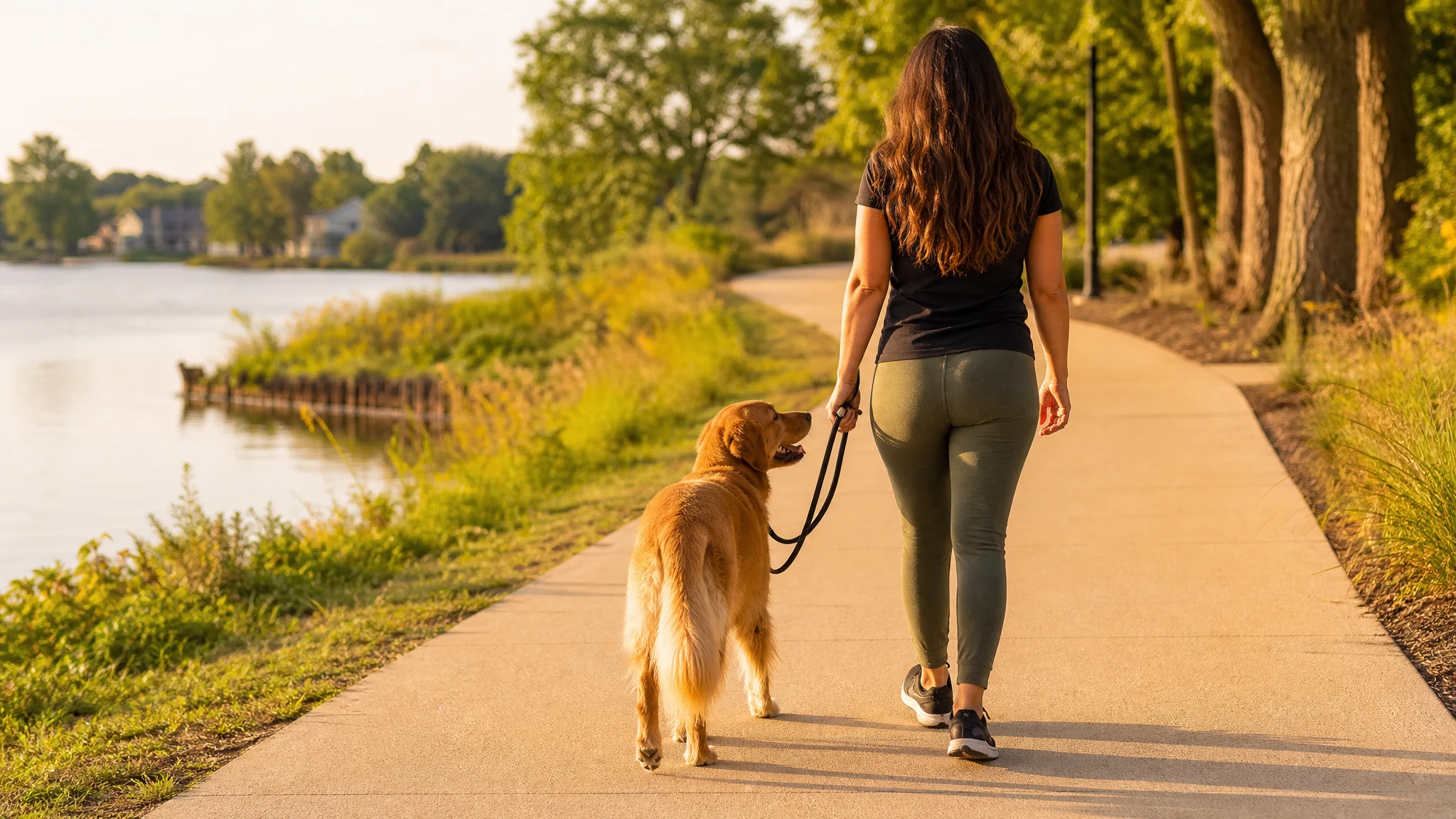
General training information. For aggression, sudden behavior changes or health concerns, see your veterinarian first.
If you are looking into dog training in Chesapeake, you probably have a specific dog in mind. Maybe a puppy who bites ankles, an adolescent who ignores you the moment another dog appears, or a rescue who is still learning what a living room is. This guide is for all of them.
We cover the kinds of training on offer, how reward-based training works, the certified trainers we can point to, what we can and cannot say about cost, and the local rules and places that shape daily life with a dog in the city.
We have not trained, tested or reviewed any of the trainers or programs named here. We simply report what their own pages and certifying bodies say, and we tell you where to confirm the details yourself.
Key Takeaways
- Group classes, private lessons, day training and board-and-train all exist. Each suits a different dog and a different household.
- The American Veterinary Society of Animal Behavior (AVSAB) recommends reward-based training. Avoid any trainer who uses shock, prong or choke collars, alpha rolls or scruffing.
- Chesapeake City Code Sec. 10-42 requires dogs to be restrained by a collar or harness and a leash when off your property.
- Dogs four months and older need a rabies vaccination and a yearly city license.
- Chesapeake has three fenced dog parks that require a membership or day pass.
- We found no published training prices for Chesapeake. Ask every provider for a written price before you commit.
Table of Contents
- The kinds of dog training available
- What reward-based training is and why it matters
- Certified dog trainers connected to Chesapeake
- What dog training costs and how to compare offers
- Chesapeake rules that shape your training
- Where to practice: dog parks and local hazards
- Getting started: a simple plan for your first month
The Kinds of Dog Training Available
Most dog obedience training in Chesapeake falls into four formats. None is better in every case. The right one depends on your dog's age, temperament, your schedule and what you want to change.
Group classes
A group class puts several dogs and owners in one room with an instructor. You learn the basics together: sit, down, loose-leash walking, coming when called and settling on a mat.
Group classes work well for puppies and for social, confident adult dogs. They teach your dog to focus on you around distractions, which is the skill most owners struggle with. They are a poor fit for a dog who is frightened of other dogs or reactive on leash. In a crowded room that dog may feel pushed past what it can handle.
Many group classes ask for proof of vaccines. As one example, PetSmart's chain-wide training rules require a distemper-parvovirus (DPP) vaccine with adenovirus and a rabies vaccine, given at least 48 hours before a session. They also require written proof at or before the first class, and puppies can start as early as 10 weeks. PetSmart has a store at Chesapeake Square, but the Chesapeake store page does not list vaccine rules, so confirm with the store directly. Any other class you consider will have its own rules, so ask before you pay.
Private lessons
In a private lesson, a trainer works with you and your dog alone, often in your home or on your street. This is usually the best format when the problem is specific to your house or routine, such as door manners, jumping on guests, separation struggles or leash trouble on your own block.
Private work is also the sensible choice for a fearful or reactive dog, because the trainer can control the distance from triggers. It asks more of you, since you do the practice between visits. That practice is where progress comes from.
Day training
In day training, a trainer works with your dog for part of the day while you are at work or busy. The trainer teaches the behavior and then coaches you to use it. A dog who knows a skill with a trainer does not automatically know it with you, so the handoff matters. Ask how many sessions are included for you to learn the cues.
Board-and-train
Board-and-train means your dog stays with the trainer for days or weeks. It can look like a shortcut, but ask hard questions first. Where will your dog sleep? How many dogs are in the home? What methods will be used, and can you see them? How will the skills transfer to your household?
A dog who behaves well in someone else's home may not behave the same way in yours. Training in a new place also needs follow-up lessons. If a provider will not describe their methods plainly or refuses a visit, treat that as a reason to walk away.
Which format fits which dog?
| Situation | Often a good fit |
|---|---|
| New puppy, healthy and social | Group puppy class, plus home practice |
| Adult dog with basic manners to learn | Group class or a few private lessons |
| Problem tied to your home or routine | Private lessons |
| Fearful or reactive dog | Private lessons, with your veterinarian involved |
| Busy household needing a head start | Day training with owner coaching |
What Reward-Based Training Is and Why It Matters
Reward-based training means you teach a dog by marking and rewarding the behavior you want. The reward might be a small treat, a toy, a game or a chance to sniff. Behavior that pays off gets repeated, so you build the habits you want and make the wrong choices less useful to your dog.
What the AVSAB recommends
The American Veterinary Society of Animal Behavior (AVSAB) is a professional group of veterinarians who focus on animal behavior. Its position is that reward-based training should be the standard for dogs, and that aversive methods carry risks to both behavior and welfare. Fear, stress and a damaged bond with the owner are the concerns most often raised.
This site follows that approach. We do not recommend shock collars, prong collars, choke collars, alpha rolls, scruffing or any dominance-based method. If a trainer suggests them, look elsewhere.
How it looks in practice
- Lure and reward: a treat guides your dog into a sit or down, then pays for it.
- Marking: a short word such as "yes" tells your dog the exact moment it did the right thing.
- Management: baby gates, leashes and closed doors stop your dog from rehearsing bad habits while it learns better ones.
- Short sessions: two or three minutes at a time, several times a day, beats one long drill.
- Raising difficulty slowly: practice in the kitchen, then the yard, then the sidewalk, then somewhere busy.
Questions to ask any trainer
- What will you do if my dog gets it wrong?
- Do you use any collar that causes pain or discomfort?
- What credentials do you hold, and who awards them?
- Can I watch a class before I enroll?
- What happens if my dog is too nervous for the group?
A good trainer answers these without defensiveness. Dog training is not a licensed profession in the way many people assume, so credentials from independent certifying bodies are a useful starting point, though not the only thing to weigh.
Certified Dog Trainers Connected to Chesapeake
Below are the trainers we found with verifiable credentials and a link to Chesapeake. This is not a ranking, a recommendation or a complete list. It reflects what the certifying bodies and the trainers' own pages state, and details can change, so confirm service areas and methods directly.
Andrea Marx, Freak On A Leash, LLC
The Certification Council for Professional Dog Trainers (CCPDT) directory lists Andrea Marx as CPDT-KA and CBCC-KA. The business's own team page lists additional credentials: CDBC, FDM and FFCP. The CCPDT profile address is in Virginia Beach. According to the business's own website, it also has a Chesapeake location at 2536 Centerville Turnpike S, Chesapeake, VA 23322. Check the business directly for current class and lesson offerings.
CCPDT directory profile | Freak On A Leash team page
Cheryl Shomo, Freak On A Leash
The CCPDT directory lists Cheryl Shomo as CPDT-KA, CBCC-KA and Fear Free Certified, with a Virginia Beach address. The business's team page describes private in-home training and virtual appointments. Whether she serves Chesapeake addresses is not confirmed in what we reviewed, so ask before booking.
Sarah Connor, Barks and Rec, Inc.
Barks and Rec's own website describes Sarah Connor as an IAABC Accredited Force-Free Dog Trainer (ADT), a licensed Family Paws Parent Educator and a graduate of the CATCH Canine Trainers Academy. A DogTrainerLocator profile gives a Chesapeake address on Tyre Neck Road, though the business site itself lists no street address. Confirm where lessons take place.
Scott Casino
DogTrainerLocator.com lists Scott Casino as a CPDT-KA holder in Chesapeake. That site is a directory of CPDT-KA holders and is not the CCPDT's own directory, and we found no business name. If you contact this trainer, ask about methods, services and current availability.
Understanding the letters
CPDT-KA and CBCC-KA are certifications offered through the CCPDT. The CCPDT keeps a public directory where you can verify a trainer's credentials yourself. IAABC is the International Association of Animal Behavior Consultants, and Fear Free is a certification program focused on lowering stress in pets. Ask each trainer what their credential means and how they keep it current.
We did not find a certified behavior consultant based in Chesapeake for this guide. If your dog shows aggression toward people, see your veterinarian first, then ask for a referral to a certified behavior professional. Do not try to fix that kind of problem with group classes or online videos.
What Dog Training Costs and How to Compare Offers
You will want a number here, and we would like to give you one. But we found no published training prices for Chesapeake trainers or classes, and we will not guess. Prices vary by trainer, format, number of sessions and dog.
Here is how to get a clear answer yourself:
- Ask for the total, in writing. A class series, a lesson package and a board-and-train stay all have different totals. Ask what the full price covers.
- Ask what is included. Are follow-up lessons, equipment, a make-up class or phone support part of the price?
- Ask about the policy. What happens if you miss a class, or the format turns out to be wrong for your dog?
- Compare by hours with the trainer. A cheap group series with a crowded room may teach less than a few private visits.
- Beware of promises. No ethical trainer can guarantee a result. Dogs are individuals, and progress depends on practice at home.
The costs we can name
One cost of owning a dog in Chesapeake is published. According to PetData, the city's licensing portal, a one-year dog license costs $10.00 for an unaltered dog and $7.00 for a spayed or neutered dog. Dog park fees are not listed in the sources we reviewed, so ask the city when you call about membership. See the license section below for details.
Chesapeake Rules That Shape Your Training
Local rules decide what your dog has to be able to do. Knowing them also helps you pick training goals.
Leash rules
The City of Chesapeake's Laws page summarizes Sec. 10-42 of the city code: dogs and cats must be restrained by a collar or harness and a chain or leash when off the owner's or caretaker's property. We did not find a maximum leash length. Virginia law (Va. Code 3.2-6538) lets localities prohibit dogs running at large.
For training, this means a reliable loose-leash walk is not optional. A comfortable harness or flat collar and a plain leash are the tools you need. Check the City Code or call the city about penalties, because we could not confirm them from the code text.
Rabies vaccination
The city's Laws page, citing Sec. 10-43 and Va. Code 3.2-6521, says dogs and cats four months and older must be vaccinated against rabies by a licensed veterinarian. This also affects classes, since many programs ask for proof of rabies vaccination.
Licensing
Under Sec. 10-62, dogs and cats four months and older must be licensed each calendar year. Licenses are sold through the City Treasurer and the city's PetData portal, in person, by mail or online. PetData lists $10.00 for an unaltered dog and $7.00 for a spayed or neutered dog for a one-year license. All licenses expire December 31, and the rabies vaccination must be valid on the date of payment.
Barking
Chesapeake has a noise rule covering animals, listed as Sec. 26-126 of the city code. We could only confirm it through a third-party summary, not the official code text, so we will not state exact hours or time limits. Read the current code or ask the city. If your dog barks a lot, treat it as a training and management topic: look at boredom, exercise, the view from the windows and what happens when you are away. Persistent barking or sudden changes can also signal a medical or anxiety issue, so talk with your veterinarian.
Dangerous dog proceedings
Under Sec. 10-47.1, the city's Laws page says a dog that attacks other animals or people may be impounded until a court hearing, and a dog found vicious or dangerous may be destroyed, removed or otherwise confined. Under Va. Code 3.2-6540, an officer seeks a summons and the general district court holds a hearing. This is a good reason to take early warning signs seriously, such as stiffening, growling, lunging or snapping. If you see them, see your veterinarian and a certified behavior professional promptly.
Pet limits
We did not find a limit on the number of pets per household, so check with the city before adding a dog.
Where to Practice: Dog Parks and Local Hazards
Chesapeake's fenced dog parks
Visit Chesapeake, the city's official tourism site, lists three dog parks. All three require a membership, though day passes are available. All are open daily from sunrise to sunset and can be reached at (757) 382-6411.
- Chesapeake City Park Dog Park, 900 City Park Drive. The front park has separate small-dog and large-dog areas, and the small-dog area is for dogs 25 pounds and under only. The rear park has 6-foot fencing with separate small and medium-large areas.
- Chesapeake Dog Park, Deep Creek, 437 S. George Washington Highway. One large fenced off-leash area for all dogs. The drinking fountain is turned off in winter.
- Chesapeake Dog Park, Western Branch, 4437 Portsmouth Boulevard. Fenced and off-leash. Single-day passes are available.
Each listing links to a guidelines and membership flyer, which we did not review. Read it before your first visit.
A dog park is a place to use skills, not a place to build them. Practice recall and settling elsewhere first. Watch your dog's body language and leave if play turns tense. A dog who is stiff, hiding or being chased repeatedly is telling you the answer. Dogs who are reactive or fearful usually do better with one-on-one walks and private lessons.
Ticks and heartworm
Training outdoors in Hampton Roads means thinking about parasites. WTKR News 3 reported that Hampton Roads is a heartworm hot spot, with vet clinics reporting about 100 cases per year. The report is undated, so ask your veterinarian about current local risk and prevention.
WTKR also quoted Old Dominion University tick researcher Holly Gaff, who described Lone Star ticks as most common locally and blacklegged ticks as prominent in Virginia that year. After outdoor sessions, check your dog's ears, armpits, groin and between the toes. Talk with your veterinarian about tick prevention.
Getting Started: A Simple Plan for Your First Month
Week one: health and basics
Book a veterinary visit. Confirm rabies and other vaccines, and rule out pain or illness that could be behind behavior changes. If your dog is four months or older, check that the rabies vaccine and city license are current. Start teaching name response, sit and a simple settle on a mat.
Week two: pick a format
Use the table earlier in this guide. Contact two or three providers, ask the questions listed above and get prices in writing. Watch a class if they allow it.
Week three: loose-leash walking and recall
Practice on a short leash in quiet places. Reward your dog for staying near you. Teach a recall word in your house, then the yard, with high-value treats. Never call your dog to you for something unpleasant.
Week four: add real life
Move to busier places in small steps. If you plan to use a dog park, visit at a quiet time and stay outside the fence first to see how your dog reacts. If anything worries you, pause and talk with your veterinarian or a certified trainer.
If you are adopting
A new dog from a shelter needs time to settle before formal training. Chesapeake Animal Services, the city shelter at 2100 S Military Highway, can be reached at 757-382-8080 according to PetData, though a city health department release lists 757-382-8181, so confirm before you call. The Chesapeake Humane Society runs an adoption center at 1149 New Mill Drive, open Tuesday to Sunday from 12 pm to 4 pm and closed Monday, and can be reached at 757-546-5355. Its veterinary clinic at 312 N. Battlefield Blvd is open Tuesday to Friday by appointment. Confirm hours before you visit.
A final word of encouragement
Good training is slow, kind and repetitive. Most owners are surprised by how much a few minutes of daily practice adds up. Pick a method that keeps your dog comfortable, set small goals and celebrate each one. You do not need a perfect dog. You need a dog who understands what you are asking.
Sources
- City of Chesapeake, Laws page
- Code of Virginia, Va. Code 3.2-6521
- Code of Virginia, Va. Code 3.2-6538
- Code of Virginia, Va. Code 3.2-6540
- PetData, City of Chesapeake license fees
- Visit Chesapeake, Chesapeake City Park Dog Park
- Visit Chesapeake, Dog Park at Deep Creek
- Visit Chesapeake, Dog Park at Western Branch
- City of Chesapeake, Animal Services Unit
- Chesapeake Humane Society, Hours and Locations
- CCPDT Certified Dog Trainer Directory, Andrea Marx
- CCPDT Certified Dog Trainer Directory, Cheryl Shomo
- Barks and Rec VA
- DogTrainerLocator.com, Scott Casino
- PetSmart Services, training classes
- WTKR News 3, heartworm in Hampton Roads
- WTKR News 3, tick researchers